
October 27, 2025 | Department News
22nd Annual STI & HIV Research Symposium
Date: Wednesday, October 29, 2025
Time: 9:00am - 4:40pm | Gregorio Millett's keynote presentation from 9:05am – 10:05am
Date: Wednesday, October 29, 2025
Time: 9:00am - 4:40pm | Gregorio Millett's keynote presentation from 9:05am – 10:05am
As scientists, clinicians, policy makers and activists gathered this week in Brisbane, Australia, for a conference on HIV/AIDS, all of them certainly expected to hear about the latest scientific advancements. Many of them probably used some of their free time to explore the rich cultural offerings of the host city. Probably only a few, though, imagined that they could view an exhibition that explored HIV/AIDS through art.
Elizabeth Bukusi, research professor of global health and obstetrics and gynecology in the UW School of Medicine, is quoted.
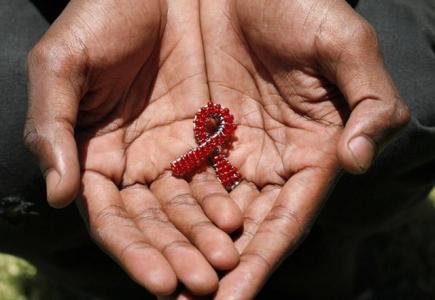
Study took place in KwaZulu Natal, South Africa, among 162 people living with HIV; findings presented at Virtual CROI 2021.
Home delivery of HIV medicines in South Africa significantly increased viral suppression compared to those who received clinical care, according to a study by researchers at the University of Washington School of Medicine.

A new grant will help deliver HIV prevention services to people in Uganda who are injecting drugs.
Renee Heffron and Andrew Mujugira are key personnel on the grant, which will support research through 2025. The project will implement pre-exposure prophylaxis (PrEP), train a mental health staff, and also include project implementation, data collection, stakeholder engagement, and dissemination of the results to communities.

The Simplifying HIV TREAtment and Monitoring (STREAM) study, led by Global Health professor Paul Drain and recently published in The Lancet HIV, found that point-of-care HIV viral load monitoring and task shifting significantly improved viral suppression and retention in HIV care, as compared to standard laboratory-based HIV viral load testing. This study was the first randomized controlled trial to compare rapid point-of-care HIV viral load testing against standard of care lab-based HIV viral load testing, which usually takes several weeks to return results to patients.
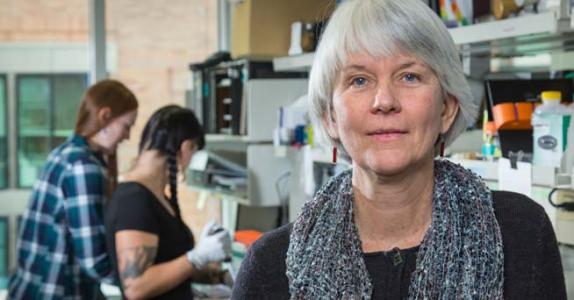
The American Academy of Arts & Sciences today announced its 2020 class of new members, including Fred Hutchinson Cancer Research Center‘s Dr. Julie Overbaugh, who studies factors that shape HIV transmission.
Paul Drain—an Associate Professor in the Department of Global Health, Medicine and Epidemiology at the University of Washington—and his research team have received a new grant from the CoMotion Innovation Gap Fund, a program intended to help bridge the gap between academic research grants and the level of development needed to obtain investment. Drain’s project is titled “Rapid test for measuring adherence to antiretroviral therapy and pre-exposure prophylaxis”.

In parts of Africa, where the HIV rate is 36 percent, researchers tested out a simple idea: They made access to care easier for people living with a chronic condition.
In a nearly three-year study in South Africa and Uganda, researchers used mobile vans in five communities to dispense care and treatment to 1,315 people living with HIV and not on antiretroviral treatment.
The randomized controlled trial, conducted between May 2016 and March 2019, found that viral suppression was 74 percent, compared to 63 percent for those seen in a clinic.
In parts of Africa, where the rate of HIV is high, researchers found that using mobile vans to dispense antiretroviral treatment and other care greatly increased viral suppression.
Researchers enrolled 1,315 people living with HIV and not on antiretroviral treatment in a nearly three-year study in South Africa and Uganda using mobile vans to dispense treatment.

Point-of-care HIV viral load testing combined with task shifting can improve viral suppression and retention in care by up to 14% and enable rapid care decisions, suggest results of a clinical trial led by the University of Washington and the Centre for the AIDS Programme of Research in South Africa (CAPRISA).